If you are facing harassment, stalking, or unwanted contact from another person, the world can quickly feel unsafe. You may be wondering if you have to wait for a physical act of violence before the law will step in to protect you. The answer is no. In New Jersey, a civil restraining order is a proactive legal tool designed to prevent harm before it escalates.
At Barli Law LLC, we understand the emotional weight that comes with seeking legal protection. Whether the situation involves a former partner, a neighbor, or a workplace acquaintance, New Jersey law provides specific pathways to secure your peace of mind. This guide explores the different types of civil orders available in 2026 and the exact steps required to obtain a Final Restraining Order (FRO).
Civil vs. Criminal Restraining Orders
One of the most common points of confusion is the difference between civil and criminal protection. While both aim to keep you safe, they function through different parts of the New Jersey court system.
- Civil Restraining Order: These are filed by a private individual (the plaintiff) in the Family Part of the Superior Court. They focus on personal safety and do not require a criminal charge or arrest to be valid. The burden of proof is lower (“preponderance of the evidence”), making it an accessible tool for many victims.
- Criminal Restraining Order: These are typically issued by a judge as a condition of bail or sentencing during a criminal prosecution (such as an assault or terroristic threats case). If the criminal charges are dropped, this order may also disappear, which is why many individuals choose to file for a civil order simultaneously.
Who Can Request a Civil Restraining Order in New Jersey?
As of 2026, New Jersey has expanded the eligibility criteria for protective orders to cover individuals who were previously left in a “legal gap.” Traditionally, the Prevention of Domestic Violence Act (PDVA) only protected individuals with a specific relationship to the defendant (spouse, former household member, dating partner, or co-parent).
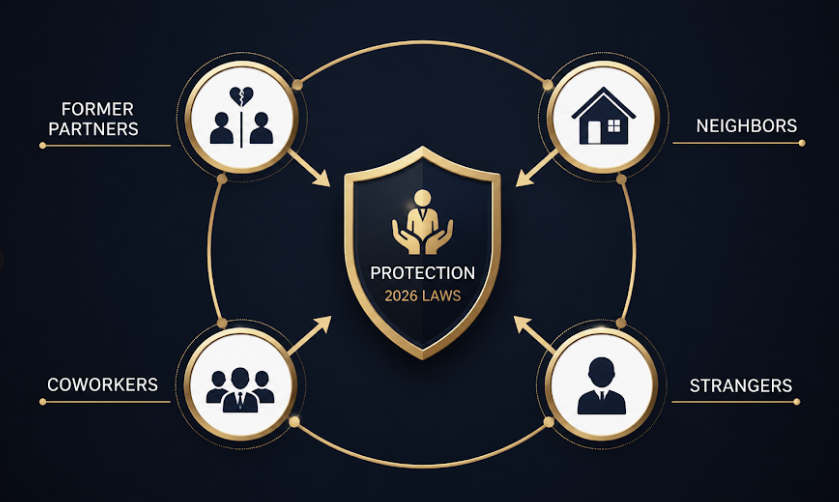
However, the Victim’s Assistance and Survivor Protection Act (VASPA) now allows victims of stalking, cyber-harassment, and sexual assault to seek protection even if they never had a domestic or romantic relationship with the harasser. This means that if a neighbor, coworker, or even a stranger is targeting you, a civil restraining order is a viable option.
Types of Civil Restraining Orders in New Jersey
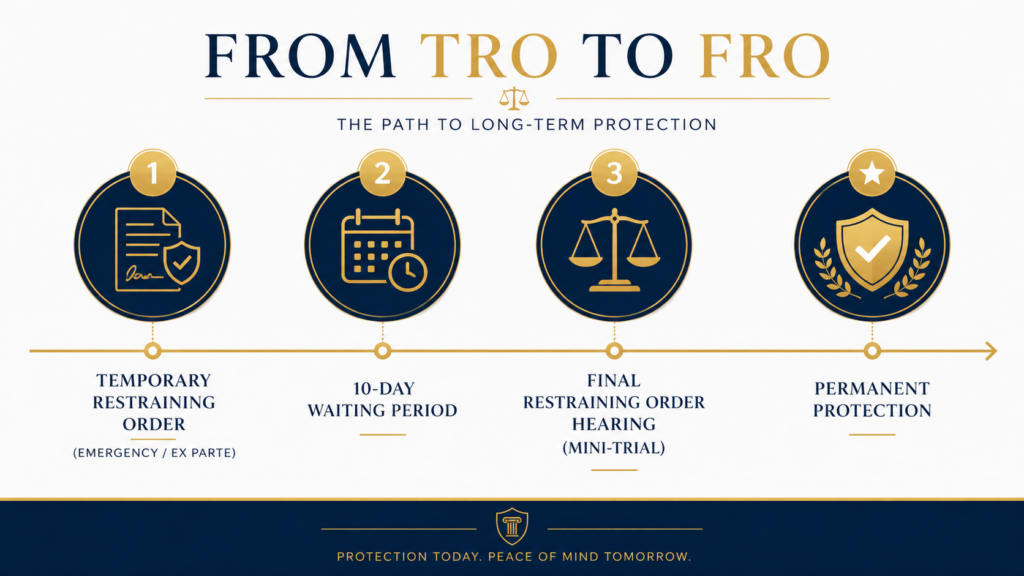
The legal process in New Jersey is structured into two distinct phases: temporary and final.
1. Temporary Restraining Order (TRO)
A TRO is a short-term emergency order. You can obtain one by visiting your local police department (after hours) or the Family Division of the Superior Court during business hours. A judge or hearing officer will listen to your testimony in an “ex parte” hearing meaning the defendant is not present. If granted, the TRO goes into effect immediately and the police will serve it to the defendant, often removing them from a shared home or confiscating their firearms.
2. Final Restraining Order (FRO)
A TRO is only valid until your final hearing, which is typically scheduled within 10 days. The FRO hearing is essentially a “mini-trial.” Both parties appear before a judge, and the plaintiff must prove that an act of violence or harassment occurred and that a permanent order is necessary for their future safety. Unlike some states where orders expire after a year, a New Jersey Final Restraining Order is permanent unless a judge formally dismisses it in the future.
What Protections Can a Civil Restraining Order Provide?
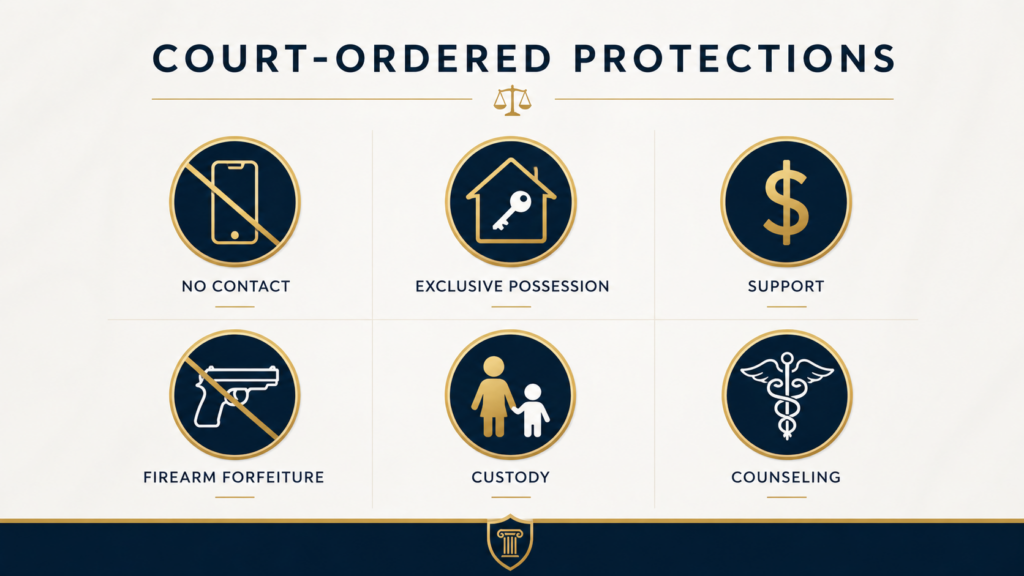
A restraining order is not a “one-size-fits-all” document. At Barli Law LLC, we work with clients to request specific “relief” tailored to their unique situation. A judge may order the following:
- No Contact: Prohibiting all forms of communication, including texts, emails, social media “likes,” or messages sent through third parties.
- Exclusive Possession: Granting the victim the sole right to live in a shared residence, regardless of whose name is on the lease or deed.
- Custody and Support: Awarding temporary child custody and requiring the defendant to continue paying rent, mortgage, or child support.
- Counseling: Requiring the defendant to attend batterers’ intervention programs or mental health evaluations.
- Firearm Forfeiture: Mandating that the defendant surrender all firearms and permits to the police.
How to File for a Civil Restraining Order
Filing for protection is a multi-step process that requires careful documentation.
- Prepare Your Petition: You must detail the “predicate act” (the specific event that triggered the filing) and any “past history” of abuse. Under New Jersey law, the court looks at the entire history of the relationship to determine if a permanent order is needed.
- The TRO Hearing: You will speak with a judge or domestic violence hearing officer. At Barli Law LLC, we help you prepare this testimony to ensure the most critical facts are highlighted.
- Service of Process: Once the TRO is granted, the police will serve the defendant. Do not attempt to serve the order yourself.
- The FRO Trial: This is the most critical stage. You will need to present evidence, call witnesses, and potentially be cross-examined by the defendant’s attorney.
Evidence That Helps Your Case
Because the FRO hearing is a trial, the quality of your evidence matters. Useful items include:
- Screenshots of threatening text messages or cyber-harassment.
- Call logs showing repeated, unwanted contact.
- Photographs of injuries or property damage (e.g., a broken door or smashed phone).
- Witnesses who saw or heard the incidents.
- Municipal court records of previous police calls to the home.
What Happens if an Order Is Violated?
Violating a restraining order is a serious offense in New Jersey. While the order itself is civil, a violation is a criminal act known as “Contempt of Court.”
If a defendant contacts you in violation of the order, you should call 911 immediately. A first-time violation can lead to jail time and fines. A second violation carries a mandatory 30-day jail sentence. New Jersey judges take these violations extremely seriously to ensure the integrity of the court’s protection.
Can an Order Be Modified or Dismissed?
Yes. Under the Carfagno v. Carfagno standard, a defendant can petition the court to dissolve a Final Restraining Order if they can show “good cause” and a significant change in circumstances. Conversely, a plaintiff can ask to modify the order to add new children or change protected addresses.
At Barli Law LLC, we represent clients on both sides of modification hearings, ensuring that the court has a full and accurate picture of the current safety environment.
Frequently Asked Questions
1. How long does a civil restraining order last in New Jersey?
A Temporary Restraining Order (TRO) lasts until the final hearing (usually 10 days). A Final Restraining Order (FRO) is permanent and does not expire unless a judge dissolves it.
2. Is a civil restraining order a public record?
Yes, though access to domestic violence records is more restricted than other real estate or civil records. However, a defendant with an FRO against them will be entered into a state and national domestic violence registry.
3. What if the other party lives in another state?
Under the “Full Faith and Credit” act, a New Jersey restraining order is enforceable in all 50 states. If you move or the defendant moves, the protection follows you.
4. Do I need an attorney for an FRO hearing?
While not required, it is highly recommended. The defendant has a right to an attorney, and navigating the rules of evidence and cross-examination is difficult while dealing with the trauma of harassment or abuse.
5. Can a restraining order affect my job?
If the order prohibits you from being at a certain location (like a shared workplace) or if your job requires a firearm permit, it can have significant professional impacts.
You Do Not Have to Navigate This Alone
Seeking a civil restraining order is a courageous step toward reclaiming your life. You deserve a legal team that acts with both speed and empathy. At Barli Law LLC, we provide the rigorous advocacy needed to secure your safety in the New Jersey court system.
Legal challenges can be overwhelming, but you don’t have to navigate them alone. If you have questions about your specific case, reach out to the team at Barli Law LLC today to schedule a consultation. You can also call us directly at (973) 638-1101.