
Deciding to end a marriage is hard enough without wondering which building to walk into or which form to mail. If you are wondering where to file for divorce, you are already taking a practical first step toward moving forward, and that deserves credit.
The good news is that New Jersey has clear rules about where your case belongs. Once you understand a few basics about residency, county, and the right court, the process feels far less overwhelming.
This guide walks you through exactly where to file, why the county matters, and what to expect when you start filing for divorce in NJ. By the end, you will know which courthouse handles your case and how to avoid a common filing mistake that can slow everything down.
Which Court Handles Divorce in New Jersey
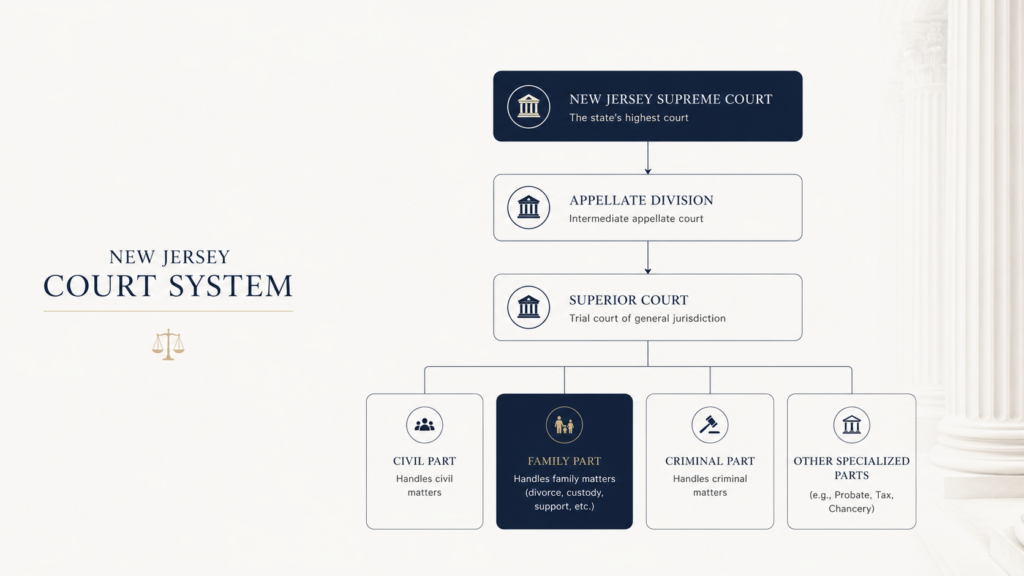
All divorces in New Jersey are handled by the Superior Court, Chancery Division, Family Part. This is the only court with the authority to end a marriage in the state.
You will not file for divorce in municipal court or small claims court. Those handle very different matters. Every divorce, whether simple or complex, goes through the Family Part of the Superior Court.
Here is how the court structure breaks down:
| Court | What It Handles | Divorce Cases? |
| Superior Court, Family Part | Divorce, custody, support, domestic matters | Yes |
| Municipal Court | Traffic, minor local offenses | No |
| Special Civil Part | Small money disputes | No |
| Superior Court, Civil Division | General lawsuits | No |
When people search for Superior Court divorce New Jersey, this is the division they need. New Jersey has a Superior Court in each of its 21 counties, and those courts are organized into 15 vicinages.
If you want the full walkthrough of the process from start to finish, our step-by-step guide to filing for divorce in NJ covers each stage in detail. This article focuses specifically on choosing the proper court and county.
NJ Divorce Residency Requirements
Before you can file anywhere in New Jersey, you have to meet the state’s residency rule. This is the threshold question, and getting it wrong can get your case dismissed.
In most cases, either you or your spouse must have lived in New Jersey for at least 12 continuous months before filing. This is the standard requirement for the most common grounds for divorce.
There is one important exception. The one-year residency requirement generally does not apply when adultery is the asserted ground for divorce, although other jurisdictional and procedural requirements must still be satisfied.
Here is a quick summary of the NJ divorce residency requirements:
- Standard grounds (such as irreconcilable differences): You or your spouse must be a New Jersey resident for 12 continuous months before filing.
- Adultery as grounds: No 12-month waiting period. Residency by either spouse is enough.
- The residency belongs to the person, not the marriage: Only one spouse needs to meet the requirement, not both.
Most couples today file on the grounds of irreconcilable differences, which simply means the marriage has broken down and cannot be repaired. For that path, the 12-month residency rule applies.
Which County to File for Divorce in NJ
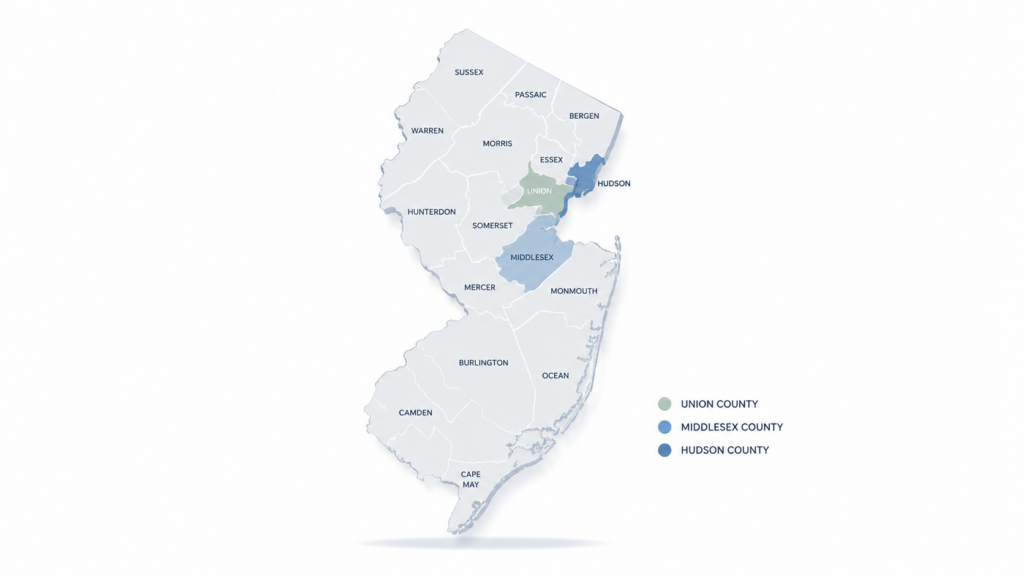
Once you meet the residency requirement, the next question is which county to file for divorce in NJ. New Jersey has specific rules here, and they are based on where the cause of action arose, not simply where it is most convenient for you.
The correct county is known in legal terms as the proper venue. In plain English, venue is just the right geographic location for your case.
The General Rule for Venue
For most divorce cases, you file in the county where you lived when the cause of action arose. For irreconcilable differences, that generally means the county where you were living when the marriage broke down.
Here is how venue is typically determined:
| Your Situation | Where You Usually File |
| Grounds are irreconcilable differences | County where you lived when the breakdown occurred |
| Fault-based grounds | County where the cause of action arose |
| You have since moved | Often the county where you currently reside |
If both spouses still live in the same county, the choice is simple. If you have moved to a different county, or your spouse has, there may be more than one acceptable option, and the right choice can depend on the details of your situation.
What If My Spouse Lives in a Different County?
If your spouse lives in a different county than you do, you generally still file in the county tied to your grounds or your current residence. Your spouse does not get to force the case into their county simply because they live there.
That said, venue disputes do happen, and a filing in the wrong county can be transferred or challenged. This is one reason many people choose to have an attorney confirm the correct county before submitting anything.
For guidance tailored to your circumstances, our divorce attorneys can help you pinpoint the right venue and file correctly the first time.
What You File and Where You Send It
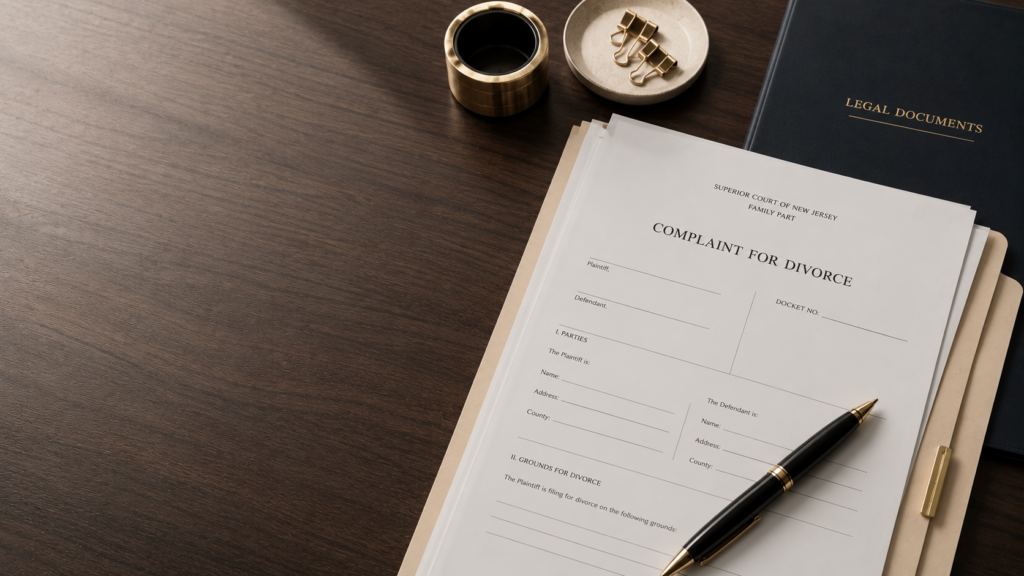
Knowing the right county is only part of the puzzle. You also need the correct documents and the correct filing method for that county’s Family Part.
Your case begins with a document called the Complaint for Divorce. This is the formal request that opens your case and tells the court what you are asking for.
Along with the complaint, you will typically need:
- A Confidential Litigant Information Sheet, which provides personal details to the court
- A Certification of Insurance Coverage, listing your current coverage
- The required filing fee, which you pay when you submit your complaint
- A Certification of Verification and Non-Collusion
Each county’s Family Part has a Family Division intake office where these documents are filed. Divorce documents may be submitted electronically through the Judiciary Electronic Document Submission system, or JEDS. Filing by mail or in person may also be available under current Family Division instructions. It is worth confirming your specific county’s process before you send anything.
For a closer look at the forms involved and how to prepare them, see our overview of divorce paperwork.
When Children Are Involved

If you and your spouse share children, the county where your case is filed carries extra weight. Custody, parenting time, and child support are all decided within the same Family Part case as your divorce.
Generally, the county tied to your divorce venue will also handle the custody portion of your case. Courts pay close attention to where the children live and what arrangement serves their best interests.
Because custody adds another layer to your filing decision, it helps to understand how these issues fit together. Our child custody resources explain how New Jersey approaches parenting arrangements during and after divorce.
Common Filing Mistakes to Avoid

A few common filing errors can create avoidable delays. Knowing them in advance saves you time and stress.
Watch out for these common missteps:
- Filing before meeting the 12-month residency requirement. Confirm your timeline first, unless you are filing on the ground of adultery.
- Filing in the wrong county. Venue is based on your grounds and residence, not convenience.
- Submitting an incomplete complaint. Missing certifications or fees can delay your case.
- Assuming every county files the same way. Electronic and in-person rules vary by vicinage.
- Guessing instead of confirming. A quick check with an attorney can prevent weeks of delay.
Getting the location and paperwork right at the start keeps your case moving. It is far easier to file correctly once than to untangle a misfiled case later.
To understand how divorce fits within the broader picture of New Jersey family matters, our family law practice page offers a helpful overview.
Final Thoughts
Figuring out where to file for divorce comes down to three things: meeting New Jersey’s residency requirement, identifying the correct county, and filing in the Superior Court, Family Part. Once those pieces line up, you are ready to begin.
You do not have to sort through every rule alone. If you are unsure which county applies to your situation or want peace of mind that your paperwork is right, we are here to help.
Reach out to Barli Law LLC for compassionate, knowledgeable guidance through every step of your divorce. Visit our Contact Us page, call (973) 638-1101, or email office@barlilaw.com.
Frequently Asked Questions
Where do I file for divorce in New Jersey?
You file for divorce in the Superior Court, Chancery Division, Family Part, in the correct county for your case. The right county is based on where you lived when your grounds for divorce arose or where you currently reside. Every divorce in the state runs through the Family Part, not municipal or civil court.
How long do I have to live in New Jersey before filing for divorce?
You or your spouse must live in New Jersey for at least 12 continuous months before filing in most cases. The main exception is adultery, which has no waiting period as long as one spouse is a New Jersey resident. Only one spouse needs to meet the residency requirement, not both.
Can I file for divorce in a different county than my spouse?
Yes, you can file in the county tied to your grounds or your current residence, even if your spouse lives elsewhere. Your spouse cannot force the case into their county simply because they live there. If a venue dispute arises, the court can decide whether the case should be transferred.
What court handles divorce in New Jersey?
The Superior Court, Chancery Division, Family Part handles all divorces in New Jersey. Municipal courts and small claims courts do not have the authority to grant a divorce. Each county has its own Superior Court location that manages family matters.
What documents do I need to file for divorce in NJ?
You need a Complaint for Divorce, a Confidential Litigant Information Sheet, a Certification of Insurance, and the required filing fee. Many cases also require a Certification of Non-Collusion. Your county’s Family Division intake office accepts these documents, and filing methods vary by county.
Does the filing county affect child custody?
Yes, custody and parenting time are decided within the same Family Part case as your divorce, usually in the county where you file. Courts focus heavily on where the children live and what serves their best interests. Because custody adds complexity, it is wise to confirm your venue carefully when children are involved.