
When a marriage ends, one of the first worries that keeps people up at night is money. Who pays whom, how much, and for how long? If you are facing a divorce in New Jersey, alimony is often the question that carries the most uncertainty and the most fear.
The good news is that alimony is not decided by a coin flip or a judge’s mood. New Jersey law lays out specific factors that guide every alimony decision, and understanding those factors puts you in a far stronger position.
By the end of this guide, you will know what a judge actually looks at, the types of support available, how long payments typically last, and where you have room to advocate for yourself. Knowledge is leverage, and this is where it starts.
What Alimony Means in New Jersey

Alimony, also called spousal support, is money one former spouse pays the other after a divorce. Its purpose is not to punish anyone. Instead, it helps the lower-earning spouse maintain a standard of living reasonably close to what the couple shared during the marriage.
This matters because marriage is treated as an economic partnership under New Jersey law. When one spouse sacrifices career growth to raise children or support the other’s career, the law recognizes that contribution. If you want a fuller breakdown of the basics, our overview of what alimony is in NJ walks through the foundations.
Alimony is also gender-neutral. Either spouse can request it, and judges decide based on finances and need, not on who is the husband or wife. We cover this directly in our discussion of whether men can receive alimony.
The Types of Alimony in NJ
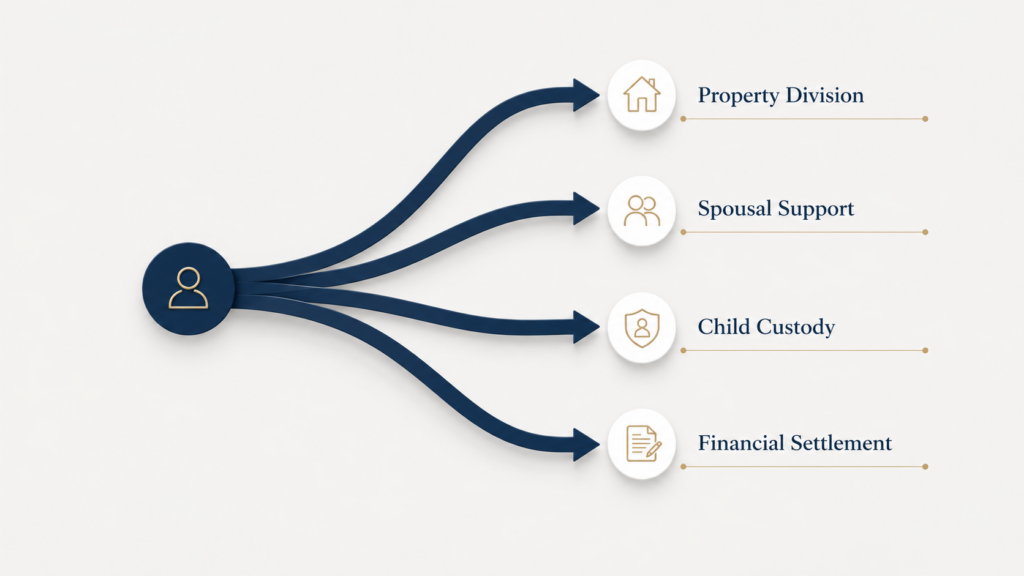
Before a judge decides how much support to award, they decide what type fits your situation. New Jersey recognizes several forms, and each serves a different purpose.
Here is how they compare:
| Type of Alimony | Purpose | Typical Duration |
| Open durational | Long-term support, usually after a long marriage | No fixed end date, but reviewable |
| Limited duration | Support for a set period after a shorter marriage | A defined number of years |
| Rehabilitative | Helps a spouse gain skills, education, or training to become self-supporting | Tied to a specific plan |
| Reimbursement | Repays a spouse who supported the other through schooling or career training | Set by the supported contribution |
The 2014 New Jersey Alimony Reform Act ended what used to be called permanent alimony and replaced it with open durational support. This was a significant shift, and it changed how long-term obligations work. You can read more about that change and its effects in our guide to reducing or ending payments under the Alimony Reform Act.
The NJ Alimony Factors a Judge Weighs
This is the heart of the matter. New Jersey law, specifically N.J.S.A. 2A:34-23(b), lists the factors a court must consider before awarding alimony. No single factor decides the outcome. A judge weighs them together to reach a fair result.
The key factors include:
- The actual need of one spouse and the ability of the other to pay
- The length of the marriage or civil union
- The age and physical and emotional health of both spouses
- The standard of living established during the marriage
- Each spouse’s earning capacity, education, and employability
- The time and cost needed for the dependent spouse to acquire training or skills
- Parental responsibilities for any children
- Financial and non-financial contributions to the marriage, including homemaking and child care
- The equitable distribution of property and any payouts from it
- The income available to either spouse through investments
- The tax consequences of any alimony award
Notice what is absent from that list: fault. New Jersey is a no-fault state for alimony purposes, which means that in most cases, behavior like adultery does not directly increase or decrease a payment. The focus stays on finances and need, not blame.
The length of the marriage carries serious weight. Shorter marriages tend to produce shorter or smaller awards, and in some cases none at all. If your marriage was brief, our article on alimony after a short marriage addresses what to expect.
How Long Does Alimony Last in NJ?

For marriages that lasted fewer than 20 years, the law generally caps alimony at the length of the marriage. A 10-year marriage, for example, will rarely produce alimony lasting longer than 10 years, except in unusual circumstances a judge must specifically explain.
For marriages of 20 years or longer, open durational alimony becomes possible. There is no automatic end date, though that does not mean payments last forever. Support can still be modified or ended when circumstances change.
Several life events can change an existing award. Retirement at full retirement age, the paying spouse losing a job, or the receiving spouse cohabitating with a new partner can all be grounds to revisit support. If your situation has shifted, our guide on reducing spousal support payments explains the process for asking a court to make a change.
What This Looks Like in Practice

Reading a list of factors is one thing. Watching them play out in your own divorce is another, and this is where many people feel overwhelmed.
In practice, both spouses submit detailed financial statements called Case Information Statements. These documents lay out income, expenses, assets, and debts. The accuracy of that paperwork matters enormously, because the numbers in it shape what a judge sees as need and ability to pay.
From there, many alimony arrangements are settled through negotiation rather than a courtroom battle. A skilled attorney can often reach a fair agreement that gives both spouses more control than a judge’s ruling would. When you understand the factors and prepare your financials carefully, you walk into those conversations with real strength. You can learn more about the broader process on our divorce practice page.
Final Thoughts
Alimony in New Jersey is not a mystery, and it is not arbitrary. It rests on a defined set of factors that center on need, ability to pay, and the life you built together. When you understand those factors, the process feels far less frightening and far more manageable.
You do not have to sort through all of this alone. If you are facing questions about spousal support, the team at Barli Law is here to listen and to help you move forward with clarity. Reach out through our contact page, call us at (973) 638-1101, or email office@barlilaw.com, and let us help you protect what matters most.
Frequently Asked Questions
How is alimony calculated in NJ?
There is no fixed formula for alimony in New Jersey. A judge weighs statutory factors such as each spouse’s income, the length of the marriage, the standard of living, and each person’s earning capacity to reach a fair amount. Because no single calculator applies, two similar-looking marriages can produce very different awards.
Does cheating affect alimony in New Jersey?
In most cases, no. New Jersey treats alimony as a financial matter, so marital fault like adultery generally does not change the amount of support. The rare exception is when the misconduct had a direct financial impact, such as one spouse spending marital assets on an affair.
How long do you have to be married to get alimony in NJ?
There is no minimum marriage length to qualify for alimony in New Jersey. Even shorter marriages can result in support, though the amount and duration are usually limited. For marriages under 20 years, alimony generally cannot last longer than the marriage itself.
Can alimony be changed after the divorce is final?
Yes. Alimony can be modified when there is a significant change in circumstances, such as job loss, retirement, a serious illness, or the receiving spouse moving in with a new partner. The spouse requesting the change must show the court that the change is substantial and ongoing rather than temporary.
Is New Jersey alimony taxable?
For divorces finalized after January 1, 2019, alimony is no longer tax-deductible for the paying spouse, and the receiving spouse does not report it as taxable income. This followed a change in federal tax law. Because tax rules can affect the real value of an award, it is wise to discuss your specific situation with an attorney.