
Few things feel as disorienting as being served with a restraining order you believe is based on inaccurate or false allegations . One moment your life is normal. Next, you are barred from your home, your children, or your firearms, and a judge has signed off on it without ever hearing your side.
You are not powerless here. A temporary order is just the first step in a process, and that process gives you real chances to tell the truth and protect your record. Understanding how to beat a false restraining order starts with knowing how the system works and where your opportunities to respond and present evidence exist .
This guide walks you through what a false restraining order is, how the New Jersey court process unfolds, the defenses that tend to work, and the mistakes that quietly sink good cases. By the end, you will know what to do next and why timing matters so much.
What a False Restraining Order in NJ Actually Means
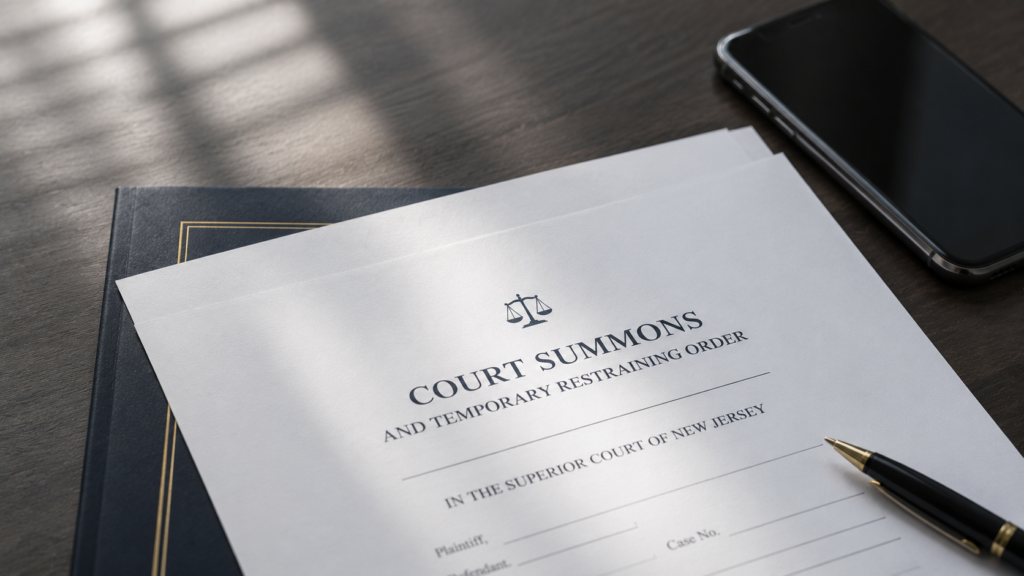
A restraining order is a court order meant to protect someone from domestic violence. In New Jersey, these fall under the Prevention of Domestic Violence Act. The problem is that the system is built to act fast and protect first, which means an order can be granted based on one person’s word before you ever speak.
A false restraining order NJ situation usually means the accuser has either exaggerated events, taken them out of context, or fabricated them outright. Motives vary, and they matter to your defense.
Common reasons people file false claims include:
- Gaining leverage in a divorce or separation
- Securing the upper hand in a custody dispute
- Forcing someone out of a shared home
- Retaliation after a breakup or argument
- Controlling or punishing a former partner
New Jersey uses a two-step structure. Knowing the difference between the two orders is the foundation of your defense.
| Order Type | When It Happens | How Long It Lasts | Your Role |
| Temporary Restraining Order (TRO) | Filed by the accuser, often without you present | Until the final hearing, usually within 10 days | You are notified and served, but do not argue your side yet |
| Final Restraining Order (FRO) | Decided at a full court hearing | Permanent in New Jersey unless later dissolved | You present evidence, witnesses, and cross-examine |
The TRO can feel like a verdict, but it is not. It simply preserves the status quo until a judge can hear both sides. Your real fight happens at the final hearing.
How the Final Restraining Order Hearing NJ Process Works

The final restraining order hearing NJ courts hold is where your case is won or lost. This is a full evidentiary hearing in the Family Division of Superior Court, and it usually takes place within 10 days of the TRO being issued. That window is short, which is exactly why preparation cannot wait.
At the hearing, the burden is on your accuser. They must prove their case by a preponderance of the evidence, which means more likely than not. For a judge to issue a final order, the accuser generally has to show three things.
- A predicate act of domestic violence occurred. This means a specific qualifying offense, such as harassment, assault, or stalking, actually happened.
- There is a history or pattern that gives the claim context, where relevant.
- An order is necessary to protect the accuser from future harm.
If any link in that chain is weak, your case has an opening. Many false claims fall apart at the first element, because no qualifying act ever happened, or at the third, because there is no genuine need for protection.
These matters move through the court system quickly, and how restraining orders intersect with the broader New Jersey court process can affect strategy, especially if related charges are involved. When a restraining order grows out of a family law or custody conflict, the stakes climb even higher.
Defenses to a Restraining Order That Actually Work
Strong defenses to a restraining order are built on evidence, not emotion. Judges see anger and frustration in every courtroom. What moves them is proof that the story does not hold together.
Here are the defenses that tend to carry weight in New Jersey:
- No predicate act occurred. If the alleged conduct never happened, or does not legally qualify as domestic violence, the foundation collapses.
- The contact was not harassment. Ordinary disagreements, single annoying messages, or mutual arguments often do not meet the legal standard.
- The accuser has a motive to lie. Pending divorce, custody fights, or a desire to remove you from a home can reveal why the claim was filed.
- The evidence contradicts the story. Texts, emails, call logs, photos, and timestamps frequently tell a different version than the accuser’s testimony.
- You were not even there. Receipts, GPS data, work records, and witnesses can establish that the alleged event could not have occurred as described.
The table below shows how evidence maps to each defense:
| Defense | Helpful Evidence |
| No act occurred | Texts, emails, witness statements |
| Not legally harassment | Full message threads showing context |
| Motive to fabricate | Divorce or custody filings, timing of the claim |
| Contradictory facts | Photos, receipts, call logs with timestamps |
| Alibi | GPS records, work logs, third-party witnesses |
A false claim often surfaces in the middle of a child custody dispute, where one parent uses the order to gain an advantage. Showing that pattern to a judge can reframe the entire case.
How to Get a Restraining Order Dismissed

Learning how to get a restraining order dismissed comes down to preparation, evidence, and conduct. There is no shortcut, but there is a reliable approach.
Follow these steps from the moment you are served:
- Read the complaint carefully. Identify exactly what you are accused of and when it supposedly happened.
- Obey the TRO completely. Do not contact the accuser, even to defend yourself. A violation can become a new criminal charge and destroy your credibility.
- Preserve all evidence. Save texts, emails, photos, and call logs. Do not delete anything, even messages that seem unhelpful.
- Gather your witnesses. Identify people who saw the events or can speak to the relationship and the accuser’s motives.
- Build a timeline. Organize what happened, when, and what proof supports your version.
- Get experienced counsel quickly. The hearing comes fast, and a lawyer can subpoena records, prepare cross-examination, and present your case properly.
What you should never do matters just as much:
- Do not contact the accuser through friends, family, or social media
- Do not post about the case online
- Do not skip the hearing, since missing it can result in a final order by default
- Do not show up without organized evidence and a clear plan
The single fastest way to lose a winnable case is to violate the temporary order. Treat it as untouchable until the judge rules.
What Happens If You Win or Lose
If the judge denies the final order, the TRO is dissolved and the restrictions end. You can begin the process of rebuilding and, in some cases, addressing the harm a false claim caused.
If the judge grants a final order, the consequences in New Jersey are serious and lasting. A final order does not expire on its own.
The effects can include:
- A permanent entry in a statewide domestic violence registry
- Loss of your right to possess firearms
- Restrictions on contact with your children
- Removal from a shared home
- Damage to employment and professional licenses
This is why the final hearing deserves your full attention and your best preparation. The difference between these two outcomes often comes down to evidence and presentation, not who is telling the truth in the abstract.
Final Thoughts
Being falsely accused is frightening, but a temporary order is not the end of your story. New Jersey gives you a real hearing, a real chance to present evidence, and a real path to clearing your name. The people who succeed are the ones who stay calm, follow the rules, gather their proof, and prepare seriously for the day in court.
If you are facing a false restraining order, you do not have to navigate it alone. Reach out to Barli Law to talk through your situation and start building your defense. You can call (973) 638-1101 or email office@barlilaw.com, and take the first step toward protecting your future.
Frequently Asked Questions
How do I beat a false restraining order in New Jersey?
You beat a false restraining order by winning at the final hearing. Preserve all evidence, obey the temporary order completely, gather witnesses, and present proof that the alleged act either never happened or does not legally qualify as domestic violence. Experienced legal representation gives you the strongest chance, since the burden is on your accuser to prove their case.
How long do I have before the final restraining order hearing?
The final restraining order hearing in New Jersey usually takes place within 10 days of the temporary order being issued. This is a short window, so you should begin gathering evidence and seeking legal counsel immediately. The speed of the process is one of the biggest reasons people feel unprepared.
Can a restraining order be dismissed before the hearing?
A restraining order can be dismissed before the final hearing, but usually only if the accuser voluntarily withdraws the complaint or the court finds a clear legal defect. In most cases, the dismissal happens at the final hearing, where the judge weighs the evidence from both sides. Until then, the temporary order remains fully in effect.
What evidence helps fight a false restraining order?
The most useful evidence includes text messages, emails, call logs, photos, GPS or location data, and witness statements. Anything with a timestamp can be powerful, since it can confirm or contradict the accuser’s timeline. Evidence of a motive to lie, such as a pending divorce or custody battle, can also reshape how a judge views the claim.
What happens if I accidentally violate a temporary restraining order?
Violating a temporary restraining order, even by accident, can lead to a separate criminal charge and seriously damage your credibility at the hearing. Avoid all contact with the accuser, including through friends, family, or social media. If you believe a violation occurred unintentionally, speak with an attorney right away rather than contacting the accuser to explain.
Is a final restraining order permanent in New Jersey?
A final restraining order in New Jersey is permanent and does not expire on its own. It can only be removed later through a separate court application to dissolve it, which has its own legal standard. This permanence is why the final hearing is so important and why thorough preparation matters.