Many couples in New Jersey choose to build lives, purchase homes, and raise children together without ever walking down the aisle. Over a decade or two, these relationships begin to feel like a marriage in every practical sense. You share a bank account, you attend school plays together, and you may even refer to each other as “husband” or “wife” in social settings.
This leads to a critical legal question: At what point does the law recognize this commitment? Are living-together partners with children considered legally married in New Jersey? The short answer is no. In New Jersey, cohabitation no matter how long it lasts does not automatically grant you the legal status of a married person. However, the presence of children creates a complex web of rights and responsibilities that exist entirely independent of your marital status.
At Barli Law LLC, we specialize in helping modern families navigate the “legal gaps” that come with cohabitation. Understanding how the law treats unmarried parents is the only way to protect your financial future and your parental rights.
Does New Jersey Recognize Common Law Marriage?
A common myth persists that if you live together for seven years, you are “common law married.” This is entirely false in the Garden State. New Jersey abolished common law marriage in 1939.
Unless you have a valid marriage license and have participated in a legal ceremony, the State of New Jersey views you as two separate legal entities. This remains true even if:
- You have lived together for 20+ years.
- You have multiple children together.
- You share a last name or file taxes jointly (which can actually lead to IRS complications).
- You hold yourselves out to the community as a married couple.
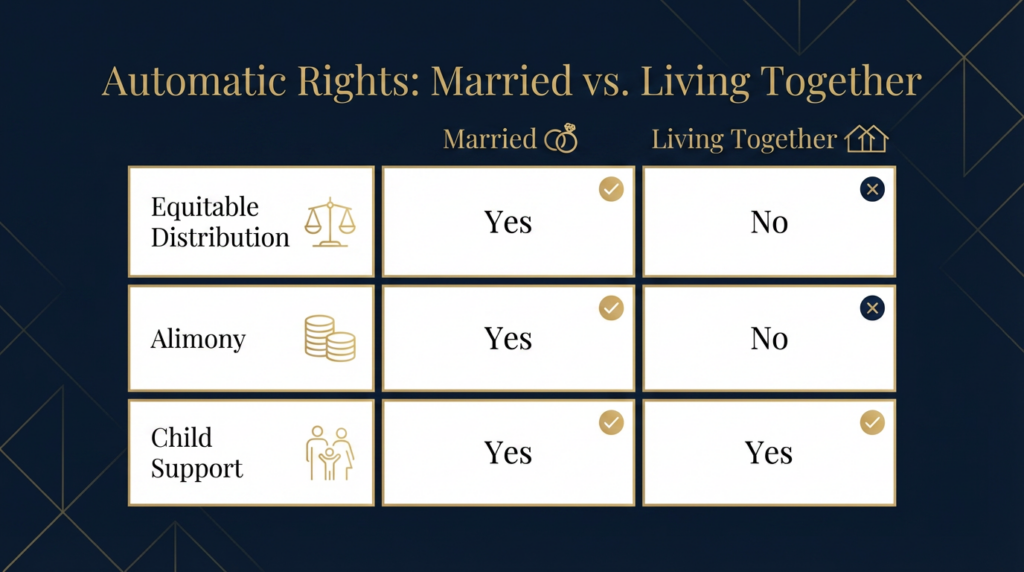
Without that marriage certificate, you do not have access to the “safety net” of the New Jersey family law divorce statutes, which provide for the equitable distribution of assets and alimony.
What Legal Rights Do Unmarried Parents Have?
While the partners may not have rights to each other’s assets, the children have full legal rights to the support and protection of both parents. New Jersey law is clear: a child born to unmarried parents has the exact same rights as a child born to married parents.
These rights include:
- The Right to Financial Support: Unmarried parents are still subject to the New Jersey child support guidelines.
- The Right to Custody and Parenting Time: Both parents have a right to seek child custody and a consistent schedule.
- The Right to Medical and Educational Decisions: This is known as “legal custody,” and it is usually shared between both parents unless there is a safety concern.
What Happens If Unmarried Partners Separate?
When a married couple separates, they file for divorce. When an unmarried couple separates, they file what is known as an “FD” case (Non-Dissolution). While the courtroom might look the same, the rules of the game are different.
In an FD case, the judge will establish a formal parenting time schedule and calculate support. However, the judge generally cannot order one partner to pay the other’s credit card debt or split a 401(k) that is in only one person’s name. This is why many unmarried partners feel “blindsided” during a breakup; they realize too late that they have no legal claim to the wealth they helped build.
How Property Is Handled for Unmarried Couples
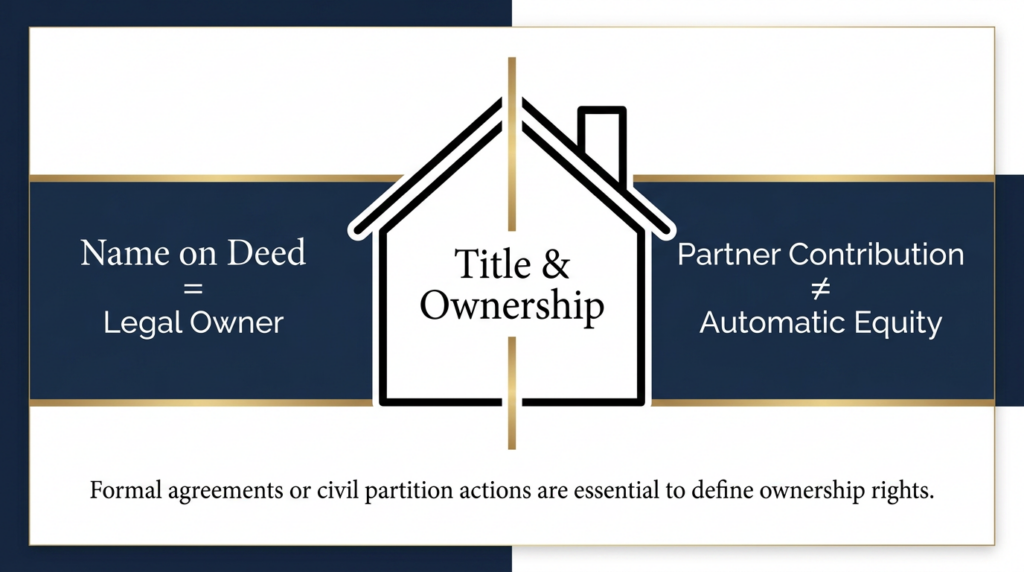
This is the area of greatest risk for cohabiting partners. If you are married, New Jersey’s “equitable distribution” laws ensure that all property acquired during the marriage is divided fairly. If you are unmarried, the law follows Title and Ownership.
- The Home: If you lived in a house for 10 years and paid half the mortgage, but only your partner’s name is on the deed, you have no automatic right to the equity in that home. You would have to file a separate, complex civil lawsuit (often a “partition” action) to try and recover your investment.
- Retirement Accounts: You cannot receive a portion of your partner’s pension or 401(k) through a simple divorce order.
- Debts: You are generally only responsible for debts that are in your name or that you co-signed.
What About Cohabitation Agreements?
To avoid the “all-or-nothing” nature of property law, savvy couples in New Jersey use Cohabitation Agreements. Think of this as a “prenup for people who aren’t getting married.”
A cohabitation agreement is a contract dispute preventative tool. It allows you to decide in advance:
- Who owns the house if you break up?
- Will one partner provide financial support (similar to alimony) to the other?
- How will shared “marital-like” debts be paid?
At Barli Law LLC, we strongly recommend these agreements for any couple purchasing real estate together or for those where one partner stays home to raise the children.
Establishing Paternity for Unmarried Fathers
For a mother, legal parentage is established at birth. For an unmarried father, it is not always automatic. To have a legal say in child custody, paternity must be established.
This is usually done through a Certificate of Parentage (COP) signed at the hospital. If that didn’t happen, you may need a court order or genetic testing. Establishing paternity is the “key” that unlocks a father’s right to parenting time and his obligation to provide child support.
The Impact of 2026 Custody Law Changes
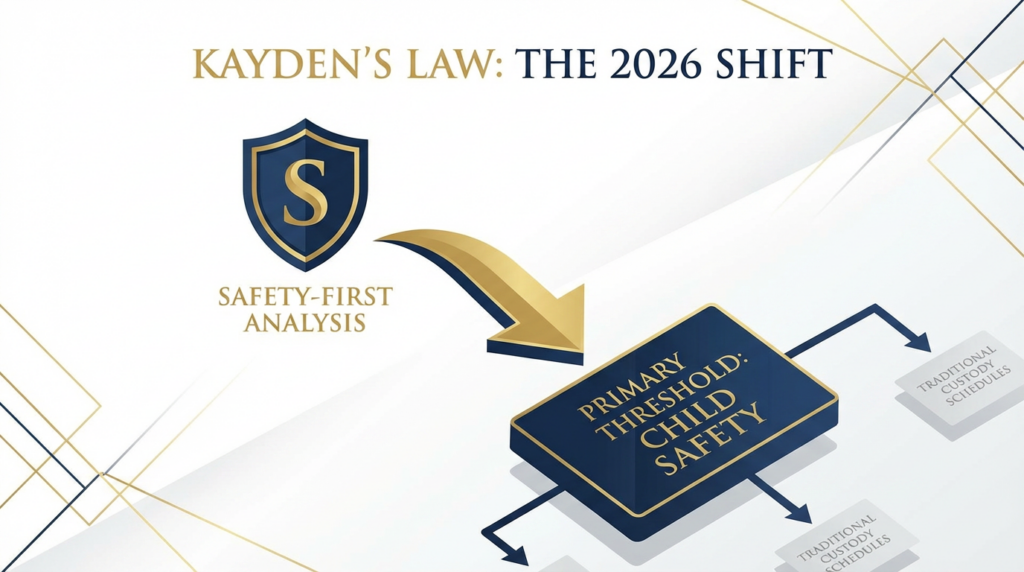
In early 2026, New Jersey implemented Kayden’s Law, which changed the landscape for all parents, married or not. The law now requires judges to perform a “safety-first” analysis in every custody case. If you are an unmarried parent seeking a civil restraining order or navigating a high-conflict separation, the court will prioritize the physical and emotional safety of the child over traditional “50/50” split presumptions.
Our team at Barli Law LLC stays at the forefront of these 2026 updates to ensure that your custody strategy is compliant with the latest New Jersey standards.
Common Misconceptions About Cohabiting Parents
- Misconception: “We have a child together, so I’m entitled to his pension.” False. Children grant you child support rights, not spousal property rights.
- Misconception: “I’ve lived here for 15 years; he can’t just kick me out.” While you have “tenant” rights that require a formal eviction, you do not have “ownership” rights unless your name is on the deed or you have a cohabitation agreement.
- Misconception: “The mother always gets custody in unmarried cases.” False. New Jersey law is gender-neutral. Custody is based on the “best interests of the child.”
Frequently Asked Questions
1. Are living together partners with children considered married in New Jersey?
No. There is no common law marriage in NJ. You are legally separate individuals.
2. Do unmarried fathers have custody rights?
Yes, but they must first establish legal paternity. Once established, they have the same rights as a married father.
3. Can unmarried partners divide property like married couples?
No. They must rely on civil contract disputes or partition actions, which are much more difficult than divorce proceedings.
4. Do unmarried parents have to pay child support?
Absolutely. The obligation to support a child is based on parenthood, not marriage.
5. Should unmarried couples have a legal agreement?
Yes. If you have significant assets, a home, or children, a cohabitation agreement provides the protection that the law does not automatically give you.
Protecting Your Rights as Unmarried Parents
Whether you are just starting your life together or are facing the end of a long-term cohabitation, you need to know where you stand. The “hidden” risks of being unmarried in New Jersey only appear when things go wrong.
At Barli Law LLC, we provide the clarity and advocacy you need to protect your children and your financial contributions. From drafting cohabitation agreements to navigating complex guardianships, our team is your guide.
Legal challenges can be overwhelming, but you don’t have to navigate them alone. If you have questions about your specific case, reach out to the team at Barli Law LLC today to schedule a consultation. You can also call us directly at (973) 638-1101.