You bought a house with a partner, inherited a home with your siblings, or went in on a rental with a friend. Now one of you wants out, the other refuses to sell, and the mortgage still comes due every month. New Jersey law gives you a way through this standoff, and it goes by the name partition action.
A partition action is a lawsuit that asks the Superior Court of New Jersey to divide jointly owned real estate, or to order its sale and split the proceeds, when the co-owners cannot agree on what to do with the property. Any co-owner can file one, and the court can grant it even if the other owners object.
Below, you will learn how a partition action works, how the two types of partition differ, what the New Jersey process looks like step by step, and what you can do if a co-owner refuses to sell.
What Is a Partition Action in New Jersey?
A partition action is a civil claim under New Jersey’s partition statutes (N.J.S.A. 2A:56-1 and following) that lets a co-owner of real property force either a physical division of the land or a sale of the whole property. The Chancery Division of the Superior Court hears these cases, because they call for equitable remedies rather than a simple award of money.
Partition exists because New Jersey law does not force anyone to stay in a co-ownership arrangement forever. If you own a share of property, you have the right to separate your interest from everyone else’s.
Who Can File a Partition Lawsuit in New Jersey
- Tenants in common, the most common form of co-ownership between unmarried partners and between siblings
- Joint tenants, including those with a right of survivorship
- Heirs who received a shared interest through a will or through intestate succession
- In some situations, anyone who holds a legal or equitable interest in the property
Married spouses are the notable exception. A divorce court handles disputes over the marital home through equitable distribution, which you can read about in our guide to property division in a New Jersey divorce, rather than through a standalone partition action.
Partition by Sale vs Partition in Kind
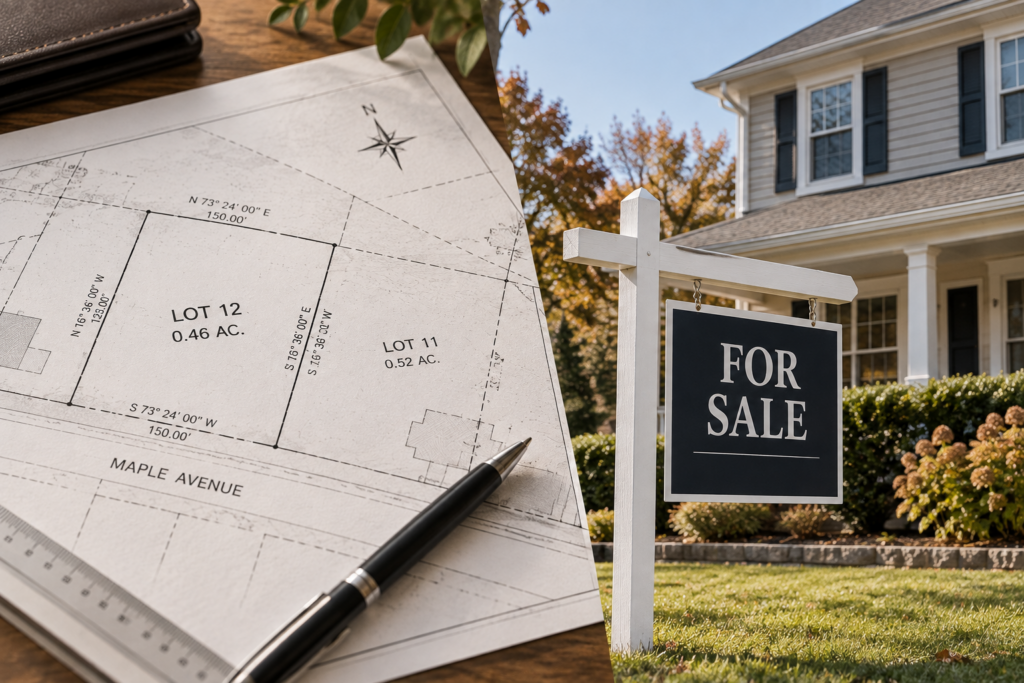
New Jersey courts recognize two outcomes in a partition action. The difference matters, because it determines whether you keep a piece of the property or walk away with a share of the money.
| Partition in Kind | Partition by Sale | |
| What happens | The court divides the land into separate parcels | The court orders a sale and splits the proceeds |
| Best suited for | Vacant land or acreage that a surveyor can fairly subdivide | Single-family homes, condos, and most residential property |
| Court preference | The statute favors this option whenever a fair division works | The court orders a sale if division would cause great prejudice to an owner |
| Who handles it | A court-appointed commissioner may survey and allocate parcels | The owners usually list the property, or a commissioner sells it under court supervision |
| Result for owners | Each owner receives a deed to a distinct piece | Each owner receives cash based on ownership share, adjusted for credits |
New Jersey law states a preference for partition in kind. In practice, most residential disputes end in partition by sale because you cannot fairly split a house into two livable halves. The court will order a forced sale of jointly owned property if a division would leave one owner with something worth far less than their share.
Does a Forced Sale Mean the Property Goes to Auction?
No, a forced sale does not always mean an auction. Courts often allow the owners to list the property on the open market with a real estate agent, which usually brings a better price than a sheriff’s sale. If the owners cannot cooperate, the court may set deadlines and appoint a commissioner or receiver to run the sale.
How a Partition Lawsuit Works in New Jersey
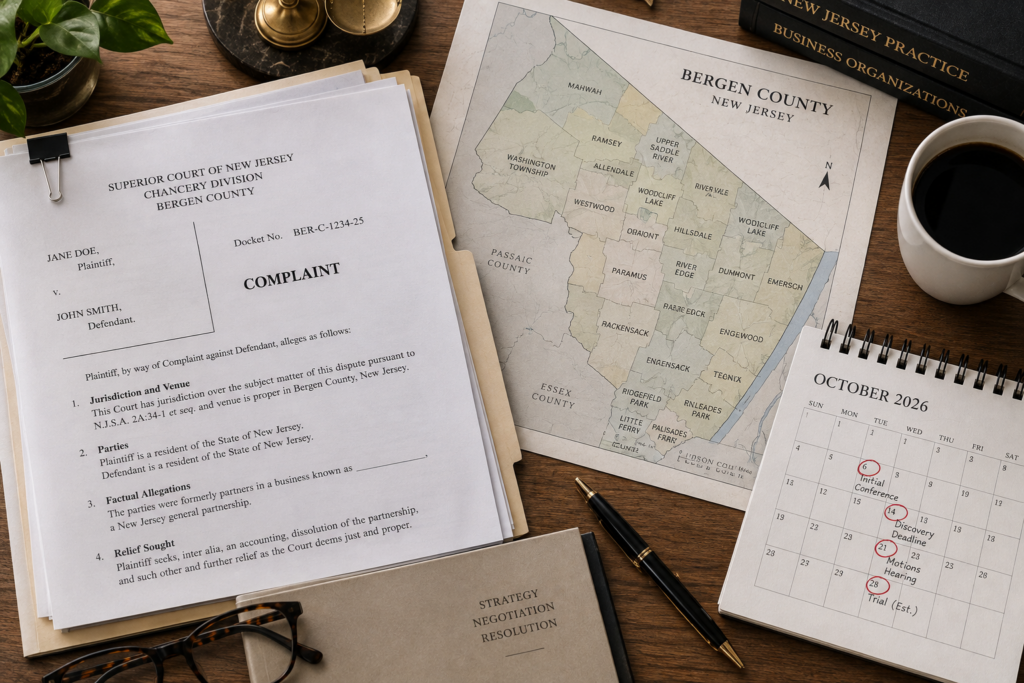
A partition lawsuit follows the same general path as other civil cases, which we cover in our overview of the three basic stages of civil litigation. The specific steps look like this:
- File the complaint. The co-owner seeking partition files a verified complaint in the Chancery Division in the county where the property sits. The complaint names every owner, describes the property, and states each party’s ownership share.
- Serve the other co-owners. You must serve every person with an interest in the property and give them a chance to respond. In many cases, you must also serve lenders and lienholders.
- Record a lis pendens. You file a notice of pending litigation with the county clerk so that anyone who checks the title knows a lawsuit affects the property.
- Exchange discovery. The parties trade documents about mortgage payments, repairs, rental income, and anything else that affects how the court should divide the proceeds.
- Court confirms the right to partition. If no one disputes ownership, the court usually confirms the right to partition early. The court resolves contested ownership claims first.
- Court chooses in kind or by sale. The judge decides whether physical division makes sense. If it does not, the court orders a sale.
- Property gets divided or sold. The court may appoint a commissioner to run the sale and hold the proceeds.
- Accounting and distribution. The court reviews each owner’s contributions and expenses, applies credits or offsets, and distributes the money.
How Long Does a Partition Action Take?
An uncontested partition action in New Jersey can resolve in several months, while a contested case with disputed contributions or ownership claims may run a year or longer. Court scheduling and the time needed to market and close on a sale both stretch the timeline. Our post on how long civil litigation takes explains what speeds a case up and what slows it down.
What Does a Partition Action Cost?
Partition costs usually include court filing fees, attorney’s fees, commissioner or receiver fees, appraisal costs, and real estate commissions on the sale. In many cases the court pays these expenses out of the sale proceeds before distribution, so each owner shares the cost in proportion to their interest.
What Happens When a Co-Owner Refuses to Sell

A co-owner who refuses to sell cannot usually stop a partition action, because New Jersey law treats the right to partition as an absolute right of ownership. The refusing owner can negotiate a buyout, contest the terms of the sale, or raise a narrow set of defenses.
Defenses That May Delay or Limit a Partition
- A written agreement not to partition. Courts may enforce a valid waiver of partition rights in a co-ownership agreement, an LLC operating agreement, or a deed for a reasonable period.
- Disputed ownership. If one party claims the other never held a true ownership interest, the court resolves that question before partition proceeds.
- Equitable claims. A co-owner who paid the entire mortgage or covered major repairs can ask for credits, which changes the split even though it does not stop the sale.
- Bankruptcy stay. A co-owner’s pending bankruptcy filing can pause the case for a time.
Can One Co-Owner Buy Out the Other Instead?
Yes, and courts encourage it. A buyout lets the owner who wants to stay purchase the departing owner’s share at an agreed or appraised value. Many partition cases settle this way before the court ever orders a sale, because both sides save on commissions and legal fees.
What If the Property Was Inherited?
Inherited property produces more partition lawsuits in New Jersey than almost any other situation. Siblings who receive a home through a parent’s will or estate often disagree within a year about whether to keep it or sell it. Sound estate planning prevents many of these disputes, but once the property has passed to multiple heirs, partition often becomes the only path forward if they cannot agree.
Credits, Offsets, and How the Court Divides Proceeds
The court does not simply split proceeds according to the deed. It performs an accounting so that each owner receives fair treatment based on what they actually put into the property and what they took out of it.
| Type of adjustment | How it affects the split |
| Mortgage principal payments | The court credits the owner who paid more than their share |
| Property taxes and insurance | The court credits the owner who covered them |
| Necessary repairs and improvements | The court credits the paying owner, usually up to the amount the work added to the property’s value |
| Rental income collected | The court charges the owner who kept the income without sharing it |
| Exclusive occupancy | The court may charge fair rental value if the occupant kept the other owner out |
| Liens and judgments | The court pays these from the affected owner’s share before distribution |
These adjustments can move tens of thousands of dollars from one owner to another, so documentation matters. Keep a record of every payment and every receipt tied to the property from the moment a dispute begins.
Why Work With a New Jersey Property Lawyer on a Partition Action

A partition action combines real estate law with civil procedure, and it often carries family or estate tension underneath. An experienced New Jersey real estate attorney helps you protect your share and present your contributions accurately so the case moves without needless delay.
Barli Law LLC assists co-owners across New Jersey with:
- Deciding whether a partition action makes sense or whether a negotiated buyout serves you better
- Preparing and filing the complaint and lis pendens
- Building the accounting record that supports your credits and offsets
- Responding to a partition lawsuit filed against you
- Overseeing the sale so your share of the proceeds stays protected
Our property lawyers understand that these cases often involve people you once trusted, and we handle them with that in mind.
Final Thoughts
Co-owning property with someone who no longer shares your goals can feel like living in a house with no exit. A partition action gives you that exit. Whether the case ends in a sale or in a buyout that keeps the property in the family, New Jersey law makes sure no one stays trapped in an ownership arrangement they did not choose to keep.
If a co-owner refuses to sell, or if someone served you with a partition lawsuit, Barli Law LLC can help you understand your options and move forward. Contact us today, call (973) 638-1101, or email office@barlilaw.com to discuss your situation.
Frequently Asked Questions
Can a co-owner force the sale of a house in New Jersey?
Yes, a co-owner can force the sale of a house in New Jersey by filing a partition action in the Chancery Division of the Superior Court. If the court cannot fairly divide the property, it orders a sale and distributes the proceeds according to each owner’s share, adjusted for contributions and expenses.
How much does a partition action cost in NJ?
A partition action in New Jersey usually costs several thousand dollars or more, depending on how contested the case becomes. Expenses include court filing fees, attorney’s fees, appraisal costs, commissioner fees, and real estate commissions, and the court typically pays most of them from the sale proceeds.
Can you stop a partition action?
You generally cannot stop a partition action unless you hold a valid written agreement that waives partition rights or you can show the filing party never held a true ownership interest. In most cases, the realistic path involves negotiating a buyout or arguing for credits that adjust how the court divides the proceeds.
What is the difference between partition in kind and partition by sale?
Partition in kind physically divides the property into separate parcels, while partition by sale sells the whole property and splits the money. New Jersey courts prefer partition in kind whenever it works in practice, but most residential cases end in partition by sale because no one can fairly split a house.
Does a partition action apply to married couples?
No, married couples in New Jersey resolve disputes over the marital home through equitable distribution in a divorce, not through a partition action. Unmarried co-owners, siblings who inherited property together, business partners, and other joint owners use partition actions.
How long does a partition lawsuit take in New Jersey?
A partition lawsuit in New Jersey can take several months if uncontested and a year or more if the parties dispute ownership shares or contributions. The time needed to market and close on a sale adds to the overall length.